
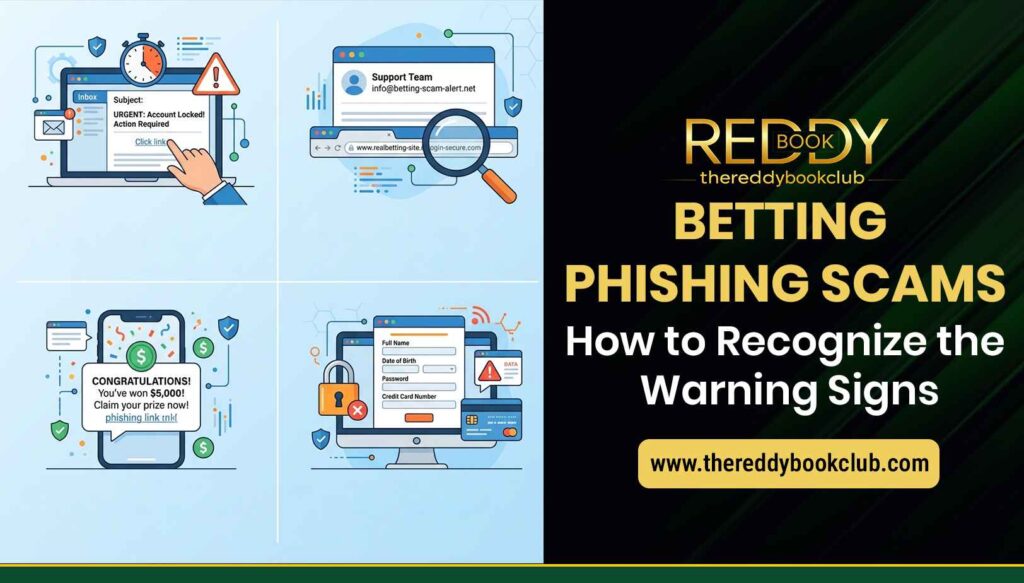
Betting Phishing Scams are designed to make a suspicious request look trustworthy. Instead of using an obviously fake message, scammers may rely on familiar names, copied branding, urgent language, or links that appear genuine. A few small details can be easy to overlook when a message creates pressure to act quickly.
Learning the warning signs can make these situations easier to recognize. This guide explains how betting phishing works, what suspicious messages can look like, how to check links, how fake support scams operate, and what to do if you have already clicked a suspicious link.
What Are Betting Phishing Scams?
Phishing is a type of online scam in which someone tries to trick you into giving away information or taking an action that benefits the scammer.
In the context of betting accounts, a scammer may pretend to represent a betting platform, customer-support team, payment service, or another familiar online service. The goal may be to obtain login credentials, passwords, one-time verification codes, personal information, or financial details.
The basic pattern is often simple:
Fake message → Fake request → Fake website or contact → Information theft
For example, you might receive a message saying that your account needs immediate verification. The message may include a link that takes you to a fake login page. If you enter your username and password there, the information could be captured by the person operating the page.
Not every unexpected message is automatically fraudulent. The important point is to recognize suspicious behavior and verify unexpected requests before responding.
Why Do Phishing Scams Target Betting Accounts?
Online accounts can become attractive targets because they may contain valuable login information and other personal details.
A scammer attempting to compromise a betting-related account may try to obtain a password or authentication code. If the same password has been reused on another website, the risk can extend beyond the original account.
This is why basic account security matters regardless of the particular service being used. Someone using Reddy Book or another online betting-related service should apply the same caution they would use with an email, shopping, social-media, or financial account.
It is also important not to assume that one specific platform is being targeted more than another without reliable evidence. Phishing is a broader online security problem, and scammers can change the names, websites, and messages they use.
The Most Common Warning Signs of a Betting Phishing Scam
Knowing the warning signs is one of the easiest ways to improve your awareness. A single sign does not always prove that a message is fraudulent, but several unusual details together should make you stop and verify the request.
Unexpected Login Requests
Be cautious when an unexpected message asks you to log in through a link.
For example, a message might claim that your account will be locked unless you sign in immediately. If you were not expecting the notification, do not automatically follow the link.
Instead, access the service through a trusted route you already know and check whether there is actually an account issue.
Urgent or Threatening Language
Phishing messages often try to create panic.
Words such as “Act now,” “Your account will be suspended,” “Verify immediately,” “Payment required,” or “Last warning” can encourage people to react before thinking.
Urgency is not proof that a message is fake, but it is a reason to slow down. A legitimate-looking notification can still deserve independent verification when it unexpectedly demands immediate action.
Suspicious Links
Links deserve particular attention because a visible link may not tell you exactly where it leads.
A scammer may create an address that looks similar to a legitimate service while using a different domain, extra words, unusual characters, or a misspelling.
Do not click automatically just because the visible text looks familiar. Check the actual destination where possible and consider navigating to the service independently instead.
Requests for Passwords or OTPs
Be extremely careful if someone asks you to reveal a password, one-time password (OTP), authentication code, or other private credential.
There is an important difference between receiving a verification code and being asked to share that code with another person.
An unexpected request for an authentication code should be treated seriously, particularly when it comes from someone claiming to be customer support.
Strange Grammar or Formatting
Poor spelling, awkward sentences, unusual capitalization, inconsistent formatting, strange logos, or other presentation problems can be warning signs.
However, good spelling does not prove that a message is genuine. Modern phishing messages can be professionally written and carefully designed.
Treat language and appearance as clues rather than proof.
Unexpected Attachments
Do not open unexpected files or download unknown applications simply because a message tells you that they are required for account verification or support.
If you were not expecting an attachment, verify the request independently before opening it.
How Fake Betting Messages Try to Look Real
Phishing works partly because scammers try to create a sense of familiarity.
A message may use a familiar brand name, copied logo, similar website design, or a name that resembles a legitimate service. Someone may also claim to be an account manager, customer-support representative, payment representative, or verification agent.
A fake message can even contain information that makes it appear personalized.
The important lesson is that appearance is not authentication.
A professional-looking email, convincing logo, or familiar profile picture does not establish that the person contacting you is legitimate. Scammers can copy visual elements from real services and use them to make fraudulent communication appear more credible.
When something unexpected asks you to log in, provide information, make a payment, or share an authentication code, verify the request through a trusted route instead of judging it by appearance alone.
Phishing Links: What Should You Check Before Clicking?
Phishing links are one of the most common ways a scammer can direct someone toward a fake login page.
Start by checking the actual destination rather than relying only on the visible words in the message. Look for unexpected domains, misspellings, extra words, or unusual characters.
For example, a scammer might use an address that resembles a familiar service but is not the same website. The difference can be easy to miss when you are viewing a message quickly on a phone.
It is safer to avoid using an unexpected login link when you can access the service through a trusted route independently. Open the service using a route you already know and check your account there.
Also remember that HTTPS alone does not prove that a website is legitimate. HTTPS can indicate that a connection is encrypted, but it does not establish who operates the website or whether the site is trustworthy.
When in doubt, stop before entering credentials.
Fake Support Messages and Customer-Service Scams
Phishing does not always arrive as an automated-looking email or SMS. Someone may contact you directly while pretending to be a customer-support representative, account manager, technical-support agent, payment representative, or verification-team member.
The person may claim that they need your login details, OTP, screenshot, payment, or remote access to solve an account problem.
Unexpected support contacts deserve extra caution.
If someone claims to represent a betting service, do not assume the claim is genuine simply because they know the service’s name or use a professional-looking profile. Verify the contact independently through a trusted channel.
This applies when dealing with services or terminology associated with Reddy Book as well. The safest approach is to verify who you are communicating with before sharing sensitive information.
Phishing Through WhatsApp, SMS, Email, and Social Media
Phishing can appear through many communication channels.
On WhatsApp and other messaging apps, scammers may use unsolicited messages, fake support profiles, or suspicious links. An SMS may contain a short account alert designed to encourage immediate clicking.
Email phishing can appear as a fake account notification, verification request, or password-reset message. Social media can also be used through fake profiles and direct messages that imitate companies or support representatives.
The important point is simple:
The communication channel does not determine whether a message is trustworthy.
A message received through WhatsApp is not automatically safer than an email. A social-media profile is not automatically genuine because it has a familiar name or logo.
Judge the request itself, verify the sender independently, and avoid providing sensitive information until you are confident about where the request came from.
What Information Should You Never Share?
Certain types of information should receive especially strong protection.
Be extremely cautious about sharing:
- Passwords
- One-time passwords
- Authentication codes
- Recovery codes
- Full payment credentials
- Sensitive personal information
- Screenshots that contain private account details
Someone claiming to be customer support does not automatically have a legitimate reason to receive these details.
If a person unexpectedly asks for a password or authentication code, stop and independently verify the request. Do not rely on the person’s displayed name, profile image, or claim of authority.
Good account security starts with treating private credentials as private.
How to Verify Whether a Betting Message Is Genuine
If a message seems suspicious, you do not need to make a quick decision. A simple verification process can help.
Step 1: Stop.
Do not click the link or respond immediately.
Step 2: Check the sender.
Look at the actual email address, phone number, username, or account instead of relying only on the displayed name.
Step 3: Check the link.
Inspect where the link actually leads before opening it.
Step 4: Use a trusted route.
Instead of following the suspicious message, access the relevant service independently through a route you already trust.
Step 5: Check your account directly.
If the message claims that something is wrong, see whether the same notification appears through the normal account interface.
Step 6: Contact support through a trusted channel.
If you need clarification, obtain the support contact information independently rather than replying to the suspicious message.
This approach gives you a chance to verify the situation without allowing the suspicious message to control your next step.
What If You Already Clicked a Phishing Link?
First, do not panic. Clicking a suspicious link does not automatically mean that your account has been compromised.
If you opened the page but did not enter any information, close it and avoid interacting with it further.
If you entered a username or password, change the affected password through the legitimate service. If that password was reused elsewhere, change it on those accounts as well.
Review account activity where the service provides that option. Pay attention to anything unusual.
You should also secure the email account associated with the service because email access can sometimes be important for account recovery. If necessary, contact the legitimate service through an independently verified support channel.
If financial information was exposed, contact the relevant financial institution promptly and follow its guidance.
Most importantly, do not follow additional instructions from the suspicious sender claiming that they can “fix” the problem. Someone who created or sent the phishing message may use the situation to attempt another scam.
How to Protect a Reddy Book Account From Phishing
Anyone using Reddy Book or another online betting-related service can benefit from basic account-security habits.
Use a strong, unique password and avoid reusing the same password across multiple accounts. Keep account-recovery information secure and treat unexpected login requests carefully.
Never share OTPs or authentication codes simply because someone claims to be support. Keep your browser and device updated, and avoid signing in through suspicious links received by message or email.
It is also useful to review unusual account activity promptly when the service provides account-activity information.
For broader guidance on account protection, see How to Protect Your Online Betting Account. The same general principles apply across many online services: protect credentials, verify unexpected requests, and slow down when a message creates pressure.
Phishing vs. Legitimate Account Notifications
Not every account notification is fraudulent. A legitimate service may sometimes notify users about account activity or ask them to take action.
The goal is therefore not to ignore every message. It is to recognize situations that deserve independent verification.
| Possible Legitimate Notification | Possible Phishing Warning |
|---|---|
| Expected account activity | Unexpected urgent request |
| Clear and consistent information | Threatening language |
| Trusted route to the service | Suspicious external link |
| No request for passwords or OTPs | Request for sensitive credentials |
| Can be independently verified | Sender discourages verification |
These are warning indicators, not absolute rules. A message should be evaluated in context, especially when it involves login credentials, payments, or other sensitive information.
Common Mistakes That Make Phishing Easier
Phishing often succeeds because someone reacts quickly.
Common mistakes include clicking immediately because a message looks urgent, trusting the displayed sender name without checking the actual address, reusing passwords, or sharing an OTP.
Other risky habits include downloading unknown applications, responding directly to suspicious support accounts, assuming a professional-looking website must be safe, and ignoring unusual account activity.
One of the simplest protections is to slow down.
Taking a few seconds to inspect a sender, check a link, or access an account independently can create an important barrier between a suspicious message and your private information.
Betting Phishing Scam Safety Checklist
Before responding to an unexpected betting-related message, ask yourself:
- ☐ Have I checked the sender carefully?
- ☐ Have I inspected the link before opening it?
- ☐ Am I being pressured to act immediately?
- ☐ Is anyone asking for my password or OTP?
- ☐ Can I verify the request independently?
- ☐ Am I using a unique password?
- ☐ Is my device and browser updated?
- ☐ Do I know what to do if my credentials were exposed?
If something does not feel right, stop and verify it before continuing.
Frequently Asked Questions About Betting Phishing Scams
What is a betting phishing scam?
A betting phishing scam is an attempt to trick someone into revealing account information, credentials, authentication codes, personal information, or financial details by pretending to be a legitimate betting service or related organization.
How can I tell if a betting message is fake?
Look for warning signs such as unexpected login requests, urgent or threatening language, suspicious links, unusual sender details, strange formatting, and requests for sensitive information.
Can a phishing message look like it came from a real betting platform?
Yes. Scammers can imitate branding, logos, names, and communication styles. Appearance alone should not be treated as proof that a message is genuine.
Should I share an OTP with betting support?
Do not disclose an authentication code simply because someone claims to be support. Verify the request independently before taking any action involving sensitive account information.
What should I do if I clicked a suspicious betting link?
Stop entering information, close the suspicious page, and secure the affected account through its legitimate service if you entered credentials. Change reused passwords elsewhere and contact legitimate support when necessary.
Is HTTPS enough to prove a betting website is legitimate?
No. HTTPS can indicate an encrypted connection, but it does not by itself prove that a website is operated by a legitimate service.
How can I protect my Reddy Book login?
Use a strong, unique password, keep credentials private, avoid unexpected login links, never share OTPs or authentication codes, and verify suspicious account messages through trusted routes.
Final Thoughts: Slow Down Before You Click
Betting Phishing Scams often depend on three things: urgency, trust, and distraction.
A message may try to make you believe there is an immediate account problem. It may use a familiar name, convincing design, or urgent language to encourage a quick response. The safest reaction is usually to slow down.
When an unexpected message asks for login details, verification, payment, or other sensitive information, stop before clicking. Check the sender, inspect the destination, and verify the request through a trusted route.
Whether you use Reddy Book or another online service, the same basic principle applies: protect your credentials, question unexpected requests, and verify before you act.